
Top list 2026
Our picks at a glance
Why is it our top pick?
Our first choice balances the 125 cm rear-facing range with integrated ISOFIX and adjustable legroom. This is an editorial recommendation, not proof of the lowest injury risk in every collision.
Read the full review ↓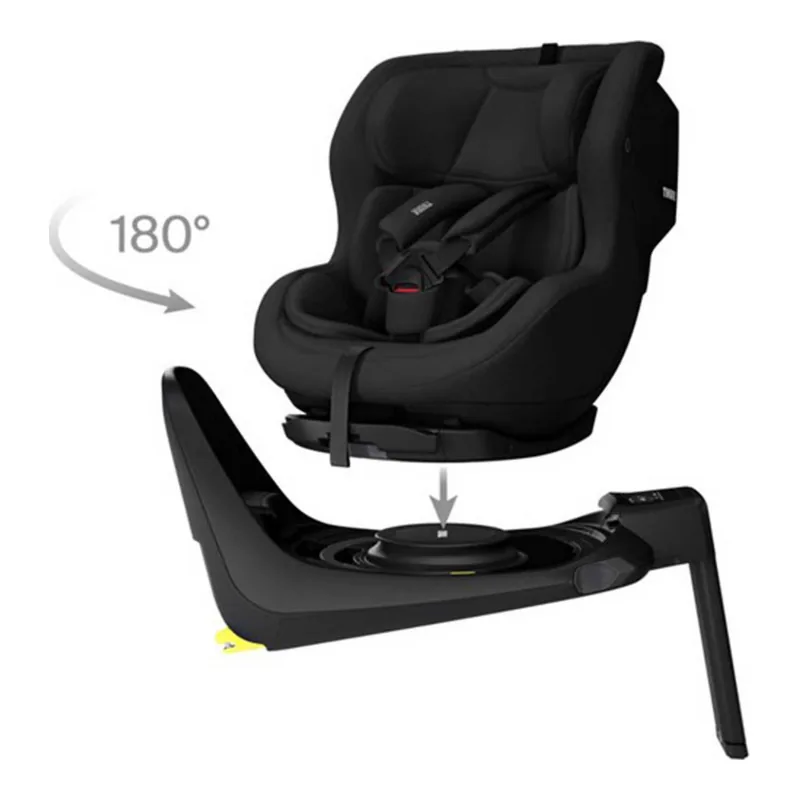
Best for installation feedback
Thule Elm RWF + Alfi BaseBest for: A modular rear-facing ISOFIX installation
8.6/10
£568
The models side by side
The key differences between the models on our list. Click a model to read the full review.
Best overall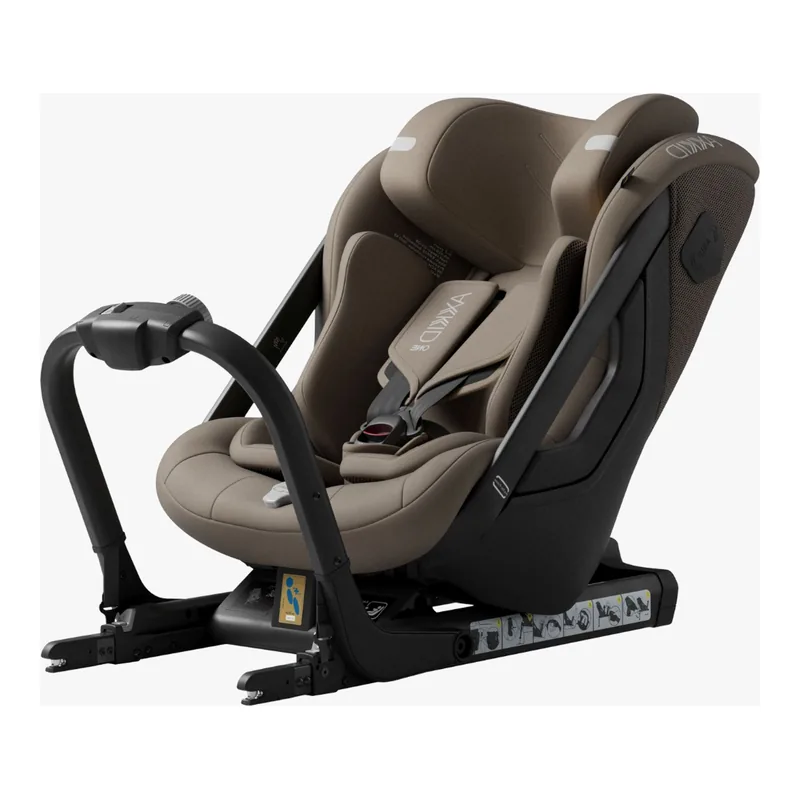 AxkidOne 3 | #2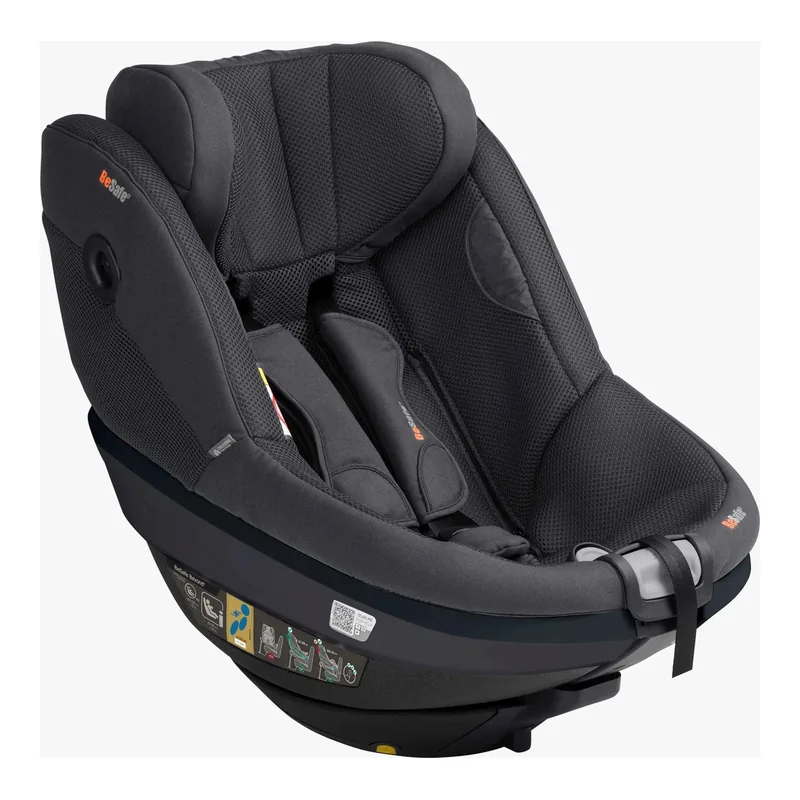 BeSafeBeyond²Best for rotation to 125 cm | #3ThuleElm RWF + Alfi BaseBest for installation feedback | #4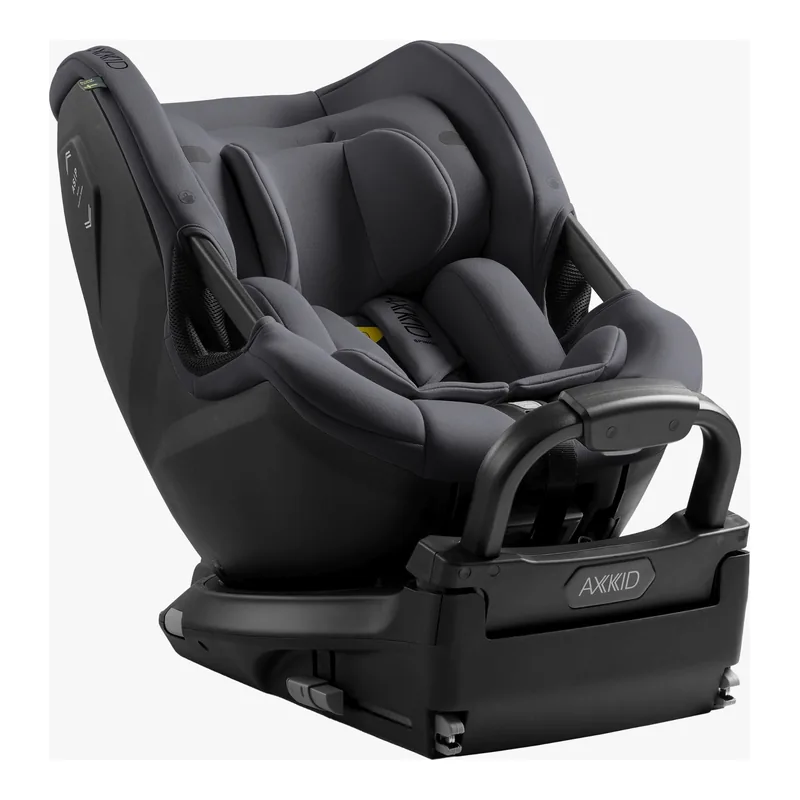 AxkidSpinkid 2Best for early-stage rotation | #5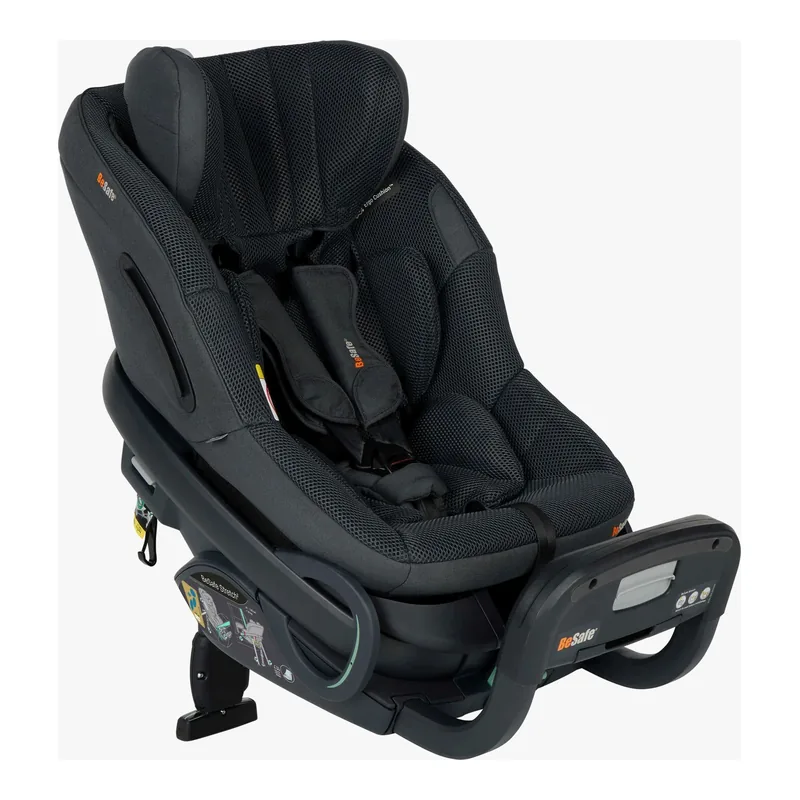 BeSafeStretch²Best for a higher weight limit | |
|---|---|---|---|---|---|
| Price | £475 | £468 | £568 | £224 | £429 |
| Child height | 61–125 cm | 61–125 cm | 67–105 cm | 40–105 cm | 61–125 cm |
| Maximum child weight | 23 kg | 22 kg | 18 kg | 18 kg | 36 kg |
| Installation | Integrated ISOFIX and support leg | Beyond ISOFIX base and support leg | Alfi ISOFIX base and support leg | Integrated ISOFIX and support leg | Three-point belt, lower tethers and support leg |
| Best for | Extended rear-facing with integrated ISOFIX | Door-side access up to 125 cm | A modular rear-facing ISOFIX installation | Door-side access from 40 cm | A higher child weight limit |
| Score | 8.9 | 8.6 | 8.6 | 8.4 | 8.4 |
Find the right child car seat for you
Compare five seats by size limits, installation and access. This preference guide cannot check fit or rule a seat safe for your child; verify every limit and vehicle requirement separately.
Best for: Extended rear-facing with integrated ISOFIX

Axkid
1. Axkid One 3
Sub-scores and weighting by criterion
- Documented safety evidenceweight 40%
- 9.0/10
9.0 out of 10 - Use and installationweight 25%
- 9.1/10
9.1 out of 10 - Ergonomics and adjustmentweight 15%
- 8.5/10
8.5 out of 10 - Rear-facing usage rangeweight 10%
- 9.0/10
9.0 out of 10 - Flexibility and purchase costweight 10%
- 8.6/10
8.6 out of 10
In short
Our first choice balances the 125 cm rear-facing range with integrated ISOFIX and adjustable legroom. This is an editorial recommendation, not proof of the lowest injury risk in every collision.
Compiled by Alexandra Eriksson · Updated
Who is the Axkid One 3 for?
Best for families who want a long rear-facing range without buying a separate base, since the integrated ISOFIX system and adjustable legroom cover 61–125 cm in one unit. It suits a car where you can check front-seat clearance in advance. Choose Beyond² or Spinkid 2 instead if door-side rotation for loading matters more to you than the slightly higher 23 kg weight limit.
A long rear-facing range without a separate base
One 3 covers children from 61 to 125 cm, subject to a 23 kg maximum. That gives it a longer stated height range than Elm RWF or Spinkid 2, although a heavier child could reach the weight limit first. The ordinary One 3 is not the One+ version: do not assume it is suitable from birth. Its integrated ISOFIX system removes the need to purchase a separate modular base, but still needs compatible anchorage points and a permitted support-leg position.
Pros
- Rear-facing to 125 cm and 23 kg
- Integrated ISOFIX installation
- Adjustable legroom
Cons
- No door-side rotation
- Lower weight limit than Stretch²
- Check front-passenger space in your car
Key specifications
Axkid- Brand
- Axkid
- Price
- £475
- Child height
- 61–125 cm
- Maximum child weight
- 23 kg
- Installation
- Integrated ISOFIX and support leg
- Plus Test
- Plus Test listed
- Approval
- UN R129; i-Size stated by Axkid
- Best for
- Extended rear-facing with integrated ISOFIX
- Overall score
- 8.9 / 10
Best for: Door-side access up to 125 cm
BeSafe
2. BeSafe Beyond²
Sub-scores and weighting by criterion
- Documented safety evidenceweight 40%
- 8.6/10
8.6 out of 10 - Use and installationweight 25%
- 8.6/10
8.6 out of 10 - Ergonomics and adjustmentweight 15%
- 8.8/10
8.8 out of 10 - Rear-facing usage rangeweight 10%
- 8.8/10
8.8 out of 10 - Flexibility and purchase costweight 10%
- 8.0/10
8.0 out of 10
In short
Beyond² combines access from the door with a 125 cm rear-facing limit. We quote a seat-and-base package rather than a seat-only price.
Compiled by Alexandra Eriksson · Updated
Who is the BeSafe Beyond² for?
Best for families who load and unload their child often and want that rotation available right up to 125 cm, provided you buy or already own the correct Beyond base. It suits households happy to treat seat and base as one package. Choose Stretch² instead if you need a higher child weight limit, since Beyond²'s 22 kg ceiling is the lowest among the 125 cm seats here.
A modular seat with a longer height range
Beyond² is a rear-facing seat for 61–125 cm with a 22 kg maximum child weight. Its separate Beyond base provides ISOFIX installation and a support leg. We quote £468 for the linked Pramworld seat-and-base package, not an incomplete seat-only offer. If you already own a base, check its exact identity and compatibility rather than assuming any base from the same brand will work. The weight limit is slightly lower than One 3’s 23 kg.
Pros
- Door-side rotation
- Rear-facing to 125 cm
- Eleven headrest positions and magnetic harness holders
Cons
- A compatible Beyond base is essential
- 22 kg weight limit
- Do not confuse with Beyond² 360
Key specifications
BeSafe- Brand
- BeSafe
- Price
- £468
- Child height
- 61–125 cm
- Maximum child weight
- 22 kg
- Installation
- Beyond ISOFIX base and support leg
- Plus Test
- Plus Test listed
- Approval
- UN R129
- Best for
- Door-side access up to 125 cm
- Overall score
- 8.6 / 10
Best for: A modular rear-facing ISOFIX installation
Thule
3. Thule Elm RWF + Alfi Base
Sub-scores and weighting by criterion
- Documented safety evidenceweight 40%
- 9.5/10
9.5 out of 10 - Use and installationweight 25%
- 8.8/10
8.8 out of 10 - Ergonomics and adjustmentweight 15%
- 8.0/10
8.0 out of 10 - Rear-facing usage rangeweight 10%
- 6.5/10
6.5 out of 10 - Flexibility and purchase costweight 10%
- 7.0/10
7.0 out of 10
In short
The Alfi system provides installation feedback, but the 105 cm limit means a shorter usable range. Confirm the exact RWF variant with the retailer: Elm 360 is a different seat.
Compiled by Alexandra Eriksson · Updated
Who is the Thule Elm RWF + Alfi Base for?
Best for buyers who want installation feedback from the Alfi base and are prepared to confirm the exact RWF variant with the retailer before ordering. It suits a shorter usage window, from 67 to 105 cm. Choose One 3, Beyond² or Stretch² instead if you want a seat that lasts through to 125 cm without planning for a replacement.
Specify RWF before placing an order
Elm RWF with Alfi Base is the rear-facing-only configuration in this comparison. The usable range is 67–105 cm with an 18 kg maximum child weight. Do not substitute an Elm 360 or Connect 360 and assume the same evidence applies. The linked Car Seats Plus bundle displays £568 and identifies an Alfi base, but does not explicitly put RWF in its title. Obtain written confirmation of the supplied variant and approval label before ordering.
Pros
- Alfi base installation feedback
- Rear-facing-only RWF configuration
- Base included in the linked bundle
Cons
- Shorter height range than the 125 cm seats
- Confirm the supplied seat is the RWF variant before ordering
- Seat and base need substantial space
Key specifications
Thule- Brand
- Thule
- Price
- £568
- Child height
- 67–105 cm
- Maximum child weight
- 18 kg
- Installation
- Alfi ISOFIX base and support leg
- Plus Test
- Elm RWF: Plus Test listed
- Approval
- UN R129
- Best for
- A modular rear-facing ISOFIX installation
- Overall score
- 8.6 / 10
Best for: Door-side access from 40 cm
Axkid
4. Axkid Spinkid 2
Sub-scores and weighting by criterion
- Documented safety evidenceweight 40%
- 8.6/10
8.6 out of 10 - Use and installationweight 25%
- 8.8/10
8.8 out of 10 - Ergonomics and adjustmentweight 15%
- 8.5/10
8.5 out of 10 - Rear-facing usage rangeweight 10%
- 6.5/10
6.5 out of 10 - Flexibility and purchase costweight 10%
- 8.8/10
8.8 out of 10
In short
Spinkid 2 combines a 40 cm minimum height with door-side rotation and an integrated base. Its 105 cm and 18 kg limits matter more than approximate age claims.
Compiled by Alexandra Eriksson · Updated
Who is the Axkid Spinkid 2 for?
Best for parents of a very young baby who also want door-side rotation and an integrated base at the lowest price point in this group. It suits families prioritising early fit and easy loading over long-term range. Choose One 3, Beyond² or Stretch² instead once your child approaches the 105 cm or 18 kg limits, since Spinkid 2 won't take you all the way to 125 cm.
The only 40 cm starting point here
Spinkid 2 is approved for 40–105 cm and up to 18 kg, making it the only model here with a 40 cm minimum. That is an approval range, not a guarantee that every newborn will achieve an appropriate fit and recline in every car. Ask a trained fitter to check the baby’s positioning and the manufacturer’s insert requirements. The integrated ISOFIX installation includes the base, so there is no separate modular base to add to the quoted price.
Pros
- Door-side rotation
- Approved from 40 cm
- Integrated base and magnetic harness holders
Cons
- 105 cm and 18 kg limits
- May need another rear-facing seat later
- Newborn suitability still requires a fit check
Key specifications
Axkid- Brand
- Axkid
- Price
- £224
- Child height
- 40–105 cm
- Maximum child weight
- 18 kg
- Installation
- Integrated ISOFIX and support leg
- Plus Test
- Plus Test listed
- Approval
- UN R129 i-Size
- Best for
- Door-side access from 40 cm
- Overall score
- 8.4 / 10
Best for: A higher child weight limit
BeSafe
5. BeSafe Stretch²
Sub-scores and weighting by criterion
- Documented safety evidenceweight 40%
- 8.6/10
8.6 out of 10 - Use and installationweight 25%
- 7.8/10
7.8 out of 10 - Ergonomics and adjustmentweight 15%
- 9.0/10
9.0 out of 10 - Rear-facing usage rangeweight 10%
- 9.4/10
9.4 out of 10 - Flexibility and purchase costweight 10%
- 7.5/10
7.5 out of 10
In short
Stretch² offers a 36 kg limit alongside a 125 cm height limit. It suits a carefully fitted, mainly permanent installation rather than families prioritising rotation.
Compiled by Alexandra Eriksson · Updated
Who is the BeSafe Stretch² for?
Best for a heavier or taller toddler, since its 36 kg limit is the highest here alongside a 125 cm height limit, and for cars where a careful belt-and-tether installation suits better than ISOFIX. It suits a seat left mostly in one car rather than moved often. Choose Beyond² or Spinkid 2 instead if door-side rotation for frequent loading matters more than the extra weight allowance.
More weight allowance, not unlimited use
Stretch² covers 61–125 cm and up to 36 kg. That is the highest maximum child weight in this selection and may help a heavier child remain rear-facing without reaching a lower weight ceiling first. The 125 cm height limit still applies, together with the manual’s fit rules. Do not read the 36 kg figure as permission to keep using it after another limit is reached. Approximate age descriptions are only a rough shopping guide.
Pros
- Highest child weight limit here: 36 kg
- Five recline positions
- Magnetic harness holders and ergonomic cushioning
Cons
- No door-side rotation
- Belt and tether installation requires care
- 11.5 kg seat is less convenient for frequent transfers
Key specifications
BeSafe- Brand
- BeSafe
- Price
- £429
- Child height
- 61–125 cm
- Maximum child weight
- 36 kg
- Installation
- Three-point belt, lower tethers and support leg
- Plus Test
- Plus Test listed
- Approval
- UN R129; belt-installed
- Best for
- A higher child weight limit
- Overall score
- 8.4 / 10
The shortlist
Other models we considered – and why they did not make the list
5 reviewed · 5 selected · 0 ruled out – see why
See whyHide
The shortlist
Other models we considered – and why they did not make the list
5 reviewed · 5 selected · 0 ruled out – see why
We compared these models with the top list. Under each one we explain what set it apart from the five we picked – such as price, test results, features or availability in the UK.
Buying guide
Choosing a child car seat for your child and car
- By Alexandra Eriksson · Updated 2026-11-16
- 6 sections
- About 2 min read
These five seats focus on rear-facing travel, but cover different stages and installation systems. Start with the child’s current height and weight, then arrange a vehicle fit check.
How do the five child car seats compare?
Back to topPrices are checked offers, not guaranteed future prices. Both separate-base models are priced as packages. The Thule listing needs explicit RWF confirmation.
| Model | Height | Child weight limit | Installation | Checked price |
|---|---|---|---|---|
| Axkid One 3 | 61–125 cm | 23 kg | Integrated ISOFIX and support leg | £475 |
| BeSafe Beyond² | 61–125 cm | 22 kg | Beyond ISOFIX base and support leg | £468 |
| Thule Elm RWF + Alfi Base | 67–105 cm | 18 kg | Alfi ISOFIX base and support leg | £568 |
| Axkid Spinkid 2 | 40–105 cm | 18 kg | Integrated ISOFIX and support leg | £224 |
| BeSafe Stretch² | 61–125 cm | 36 kg | Three-point belt, lower tethers and support leg | £429 |
Stop at whichever applicable size or fit limit is reached first.
Which child car seat suits your family?
Back to topThe right seat depends on your child's current height and weight, how your car is set up, and how often you need to lift them in and out. Here are some common situations and which seats in this comparison fit them best.
For a new-born
Axkid Spinkid 2 is the only seat here approved from 40 cm, which matters if you want one seat covering the earliest weeks. A fit check with your baby present is still worth arranging, since approval from 40 cm is not a guarantee of a good recline for every newborn. One 3, Beyond² and Stretch² all start at 61 cm and are not suitable this early.
For frequent loading and unloading
If you're regularly lifting a wriggling toddler in and out, door-side rotation on Beyond² or Spinkid 2 makes the routine less awkward than reaching across a fixed seat. Beyond² keeps that convenience up to 125 cm, while Spinkid 2 tops out at 105 cm and 18 kg, so you may need a second seat later. One 3 and Stretch² have no rotation at all.
For a heavier or taller toddler
BeSafe Stretch² has the highest child weight limit in this group at 36 kg, alongside the 125 cm height limit shared with One 3 and Beyond². That makes it the seat least likely to be outgrown by weight before height. The trade-off is belt-and-tether installation rather than ISOFIX, and no door-side rotation.
For keeping the purchase price down
Axkid Spinkid 2 is the lowest-priced complete system here and includes its own integrated ISOFIX base, so there's no separate base to add to the cost. It suits families who want rear-facing travel with rotation without paying for a 125 cm range they may not need yet.
For a car without full ISOFIX provision
BeSafe Stretch² installs using the vehicle's three-point belt, lower tethers and a support leg, which can work where ISOFIX anchorage points are limited or absent. Have the installation demonstrated before relying on it, since belt-and-tether fitting needs more care than clicking into ISOFIX.
What does UK law require for child car seats?
Back to topChildren must normally use a child car seat until their 12th birthday or until they are 135 cm tall, whichever comes first. Height-based seats must be rear-facing until the child is over 15 months old; that is a legal minimum, not a recommendation to turn a child forward at that point.
No. UN R129 is the approval regulation; i-Size is a category within it with vehicle-compatibility provisions. A belt-installed R129 seat is not automatically i-Size. Check the approval label, vehicle list and both manuals.
GOV.UK explains the rules at https://www.gov.uk/child-car-seats-the-rules. Legal exceptions exist, but they are not a reason to choose an unsuitable restraint for routine journeys. Never place a rear-facing seat in front of an active passenger airbag.
How do you check a car seat is installed correctly?
Back to topISOFIX is an attachment method, not a safety score. One 3 and Spinkid 2 have integrated systems; Beyond² needs the Beyond base and Elm RWF needs Alfi. Stretch² uses a three-point belt, lower tethers and support leg.
Consult both manuals and the current vehicle compatibility information. Floor compartments, seat angle, head restraints and front-passenger space can affect installation. Ask a trained fitter to demonstrate the approved arrangement and practise it yourself before travelling.
How do you plan a seat around your child's growth?
Back to topSpinkid 2 starts at 40 cm; One 3, Beyond² and Stretch² start at 61 cm; Elm RWF starts at 67 cm. A seat with a higher minimum is not suitable for a smaller child just because it reclines.
A 125 cm seat does not necessarily last until the height limit: Beyond² stops at 22 kg and One 3 at 23 kg, while Stretch² allows 36 kg. Check the harness and head-position instructions too. Door-side rotation aids loading but does not authorise forward-facing travel.
How should you read child car seat safety claims?
Back to topR129 approval, a Plus Test pass and an ADAC or Which? result describe different evidence. Our editorial scores are not any of those test results. Do not transfer a result from Beyond to Beyond² or Elm RWF to Elm 360.
We have not reproduced numerical ADAC or Which? results where the accessible English material did not establish an unambiguous exact-model result. Retailer claims and customer ratings are not independent crash-test verdicts.
Before you buy
Common pitfalls when buying child car seats
Some of the costliest mistakes with a child car seat happen before you've even left the shop, and some figures on the box matter less than they look once you check the approval label and your own car.
Common mistakes
- Buying the wrong variant by name alone. Beyond² and Beyond² 360, or Elm RWF and Elm 360, are different versions with different evidence behind them. Confirm the exact variant and approval label before ordering, not just the model name.
- Choosing by approximate age instead of height and weight. Marketing age ranges are a rough guide at best. Stop using a seat whenever any applicable height or weight limit is reached, whichever comes first.
- Skipping the front-passenger check. A rear-facing seat must never go in front of an active passenger airbag. If you plan to use the front seat, confirm the airbag can be deactivated and that the position is permitted.
- Ignoring support-leg restrictions. Floor storage compartments in some cars can prevent a support leg from locking correctly. Check this with the seat in the exact vehicle, not just against a generic compatibility list.
- Assuming rotation means forward-facing is allowed. Door-side rotation on Beyond² or Spinkid 2 only helps with loading. The seat must be locked in its approved rear-facing travel position before you drive.
Hidden costs
- A base that isn't included. Beyond² needs the Beyond base and Elm RWF needs the Alfi base; both are quoted here as seat-and-base packages. If you're pricing a seat-only listing elsewhere, check whether the base is actually included.
- A professional fit check. Getting a trained fitter to confirm installation and harness positioning is worth budgeting for, especially with a belt-and-tether system like Stretch² or a new base like Alfi.
- Outgrowing a seat early. Elm RWF and Spinkid 2 are both capped at 105 cm and 18 kg, so a fast-growing or heavier child may need a replacement seat sooner than with the 125 cm models.
- Moving the seat between cars. If the seat travels between vehicles, each one needs its own fit check, and support-leg or ISOFIX compatibility can differ between cars even from the same manufacturer.
Figures that look better on paper
- The headline height limit. A 125 cm approval on One 3, Beyond² or Stretch² doesn't mean a child will stay rear-facing that long. Beyond² stops at 22 kg and One 3 at 23 kg well before 125 cm for a heavier child.
- "Plus Test listed". This indicates the seat appears in that test programme, not a specific numerical result we can quote. It isn't the same as a named ADAC or Which? score, and we haven't reproduced figures we couldn't verify for the exact variant.
- ISOFIX as a safety indicator. Integrated ISOFIX, a modular base or belt-and-tether installation are different attachment methods, not a ranking of crash protection. Check the complete installed system against both manuals rather than assuming ISOFIX alone makes a seat safer.
- Installation-feedback features. Indicators like those on the Alfi base help confirm correct attachment, but they don't replace following the full instructions or checking the locked travel position and harness tension yourself.
Frequently asked questions
What does UK law require?
Children must normally use a child car seat until their 12th birthday or until they are 135 cm tall, whichever comes first. Height-based seats must be rear-facing until the child is over 15 months old; that is a legal minimum, not a recommendation to turn a child forward at that point.
Are R129 and i-Size the same?
No. UN R129 is the approval regulation; i-Size is a category within it with vehicle-compatibility provisions. A belt-installed R129 seat is not automatically i-Size. Check the approval label, vehicle list and both manuals.
When has a child outgrown a seat?
Stop using it when any applicable limit is reached, including height, child weight and the manufacturer’s harness or head-position rules. Approximate ages are not fitting limits.
Can I put a rear-facing seat in the front?
Never use a rear-facing seat in front of an active passenger airbag. Only use a seating position and installation permitted by the car and seat manufacturers, with the airbag deactivated where required.
Does rotation mean forward-facing travel is allowed?
No. Door-side rotation can simply help you load the child. Beyond² and Beyond² 360, and Elm RWF and Elm 360, are different versions. Lock the seat in the approved travel position before driving.
Have you tested the child car seats yourselves?
No. We compile published evidence, manufacturer specifications and UK retailer information. We do not claim hands-on use or our own crash testing, and our scores are not ADAC or Which? results.
Do I need to buy a separate base for every seat?
Not always. Axkid One 3 and Axkid Spinkid 2 have integrated ISOFIX systems, so there's no separate base to buy. BeSafe Beyond² and Thule Elm RWF need their own Beyond or Alfi base, and these are quoted here as seat-and-base packages rather than seat-only prices.
How do I know if a seat will actually fit my car?
Check both the seat and vehicle manuals for compatibility, try the seat with the front seat in its normal driving position, and arrange a fit check with a trained fitter where possible. Support-leg clearance, floor storage compartments and available front-passenger space can all affect whether an otherwise suitable seat fits properly.
How we compiled the evidence
How we choose the best child car seats
A comparison of published evidence for rear-facing child car seats, not a Testrated crash test. Documented safety evidence carries the most weight: 40 per cent. The scores are editorial assessments of the combined evidence, not results from our own hands-on tests.
Sources used in this guide
Step 1 · What we weigh
Scoring criteria and weighting
Documented safety evidence carries the most weight: 40 per cent. Click an area to see what it covers.
Documented safety evidence
40% of the scoreDocumented safety evidence: 40%
Highest sub-score for documented safety evidence: Thule Elm RWF + Alfi Base with 9.5 out of 10.
Step 2 · The result
How we calculated the scores
All five models are assessed against the same five criteria. The criteria carry different weights: documented safety evidence 40 %, use and installation 25 %, ergonomics and adjustment 15 %, rear-facing usage range 10 %, flexibility and purchase cost 10 %. The overall score is the weighted sum of the sub-scores, rounded to one decimal place.
Overall scoredocumented safety evidence × 40%use and installation × 25%ergonomics and adjustment × 15%rear-facing usage range × 10%flexibility and purchase cost × 10%
| Model and sub-scores (Documented safety evidence, Use and installation, Ergonomics and adjustment, Rear-facing usage range, Flexibility and purchase cost) | Overall score |
|---|---|
| Axkid One 39 · 9.1 · 8.5 · 9 · 8.6 (sub-scores) | 8,9/10 |
| BeSafe Beyond²8.6 · 8.6 · 8.8 · 8.8 · 8 (sub-scores) | 8,6/10 |
| Thule Elm RWF + Alfi Base9.5 · 8.8 · 8 · 6.5 · 7 (sub-scores) | 8,6/10 |
| Axkid Spinkid 28.6 · 8.8 · 8.5 · 6.5 · 8.8 (sub-scores) | 8,4/10 |
| BeSafe Stretch²8.6 · 7.8 · 9 · 9.4 · 7.5 (sub-scores) | 8,4/10 |
The method in detail
How we compiled this comparison
We compare published product information and UK purchase routes; we have not carried out crash tests or hands-on seat fitting.
Seat-specific assessment
The criteria weight documented safety evidence at 40%, use and installation at 25%, ergonomics at 15%, rear-facing range at 10%, and flexibility and purchase cost at 10%. The retained scores are editorial comparisons, not probabilities of injury.
Evidence boundaries
We distinguish model generations, rear-facing-only variants and required bases. We do not infer hidden Which? results or convert a retailer’s ADAC claim into an expert card. UK offers were checked on 16 November 2026; the retained cost sub-scores were not recalculated for these offers.
What a buying guide cannot establish
Only an individual fit check can establish the practical suitability of a seat for a particular child and vehicle combination. Follow current manufacturer instructions and GOV.UK guidance over general buying advice.
Sources reviewed
- UK retailer product information
- Manufacturer specifications
- GOV.UK legal guidance
Reviewed by
Alexandra Eriksson
Editor, Home & Kitchen, Beauty and Family
Last reviewed 16 November 2026
Sources and references
References for the details on child height, maximum child weight, installation, plus test, approval and guidance for choosing child car seats. Each link is described below.
- 1John Lewis: Axkid One 3Product page with price, stock and specifications.
- 2Winstanleys Pramworld: BeSafe Beyond²Product page with price, stock and specifications.
- 3Car Seats Plus: Thule Elm RWF + Alfi BaseProduct page with price, stock and specifications.
- 4John Lewis: Axkid Spinkid 2Product page with price, stock and specifications.
- 5In Car Safety Centre: BeSafe Stretch²Product page with price, stock and specifications.
- 6GOV.UK: child car seats and the lawLegal minimums, approval labels and fitting restrictions; checked 2026-11-16.
The highest overall score is our weighted verdict for child car seats. If flexibility and purchase cost matters more to you than documented safety evidence, another of our picks may suit you better.